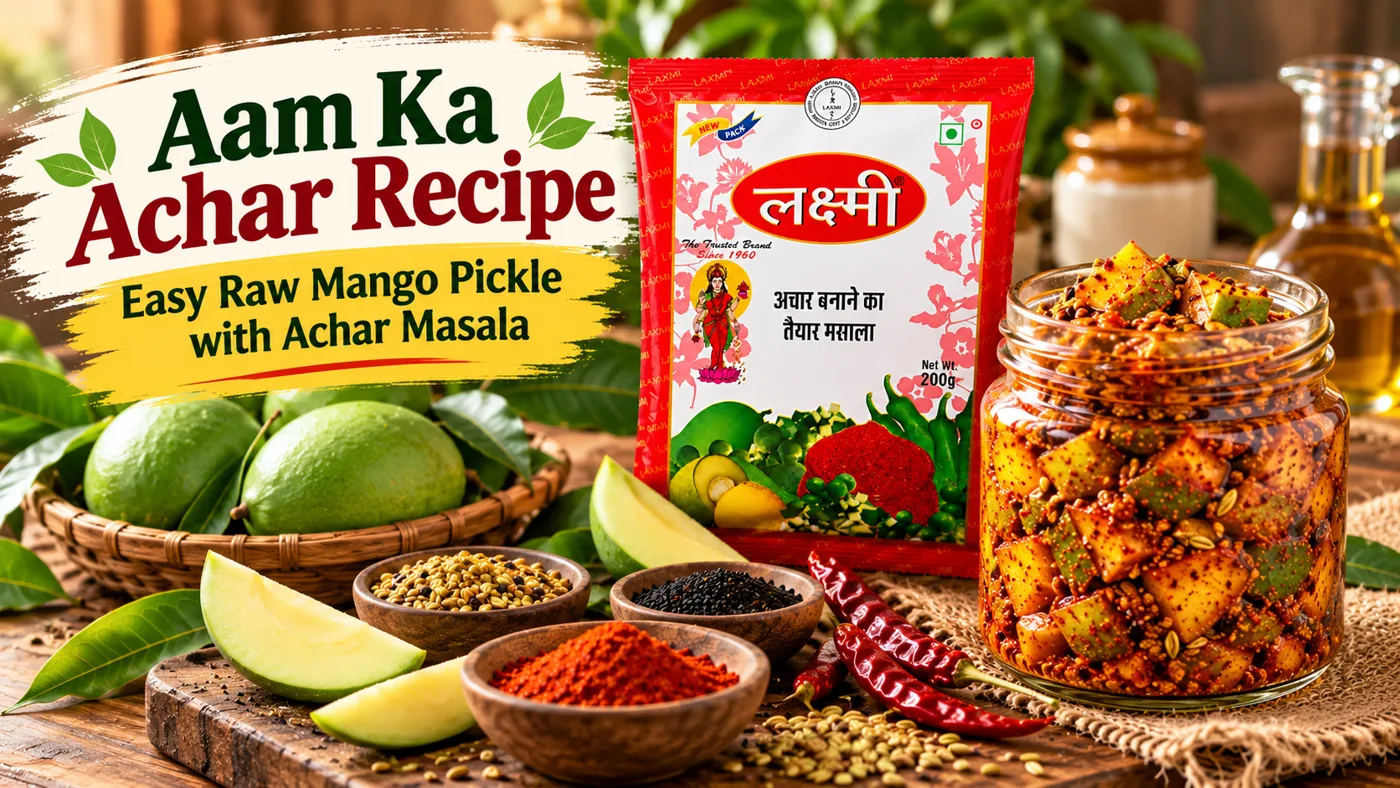
Summer brings fresh raw mangoes into Indian kitchens and revives the tradition of making homemade pickles. A jar of tangy, spicy aam ka achar is a familiar favourite that adds flavour to everyday meals, whether served with dal and rice, hot parathas or a simple roti-sabzi combination.
If you have been searching for an easy aam ka achar recipe, this step-by-step guide will help you understand the ingredients, preparation process and storage essentials.
One of the most important parts of mango pickle is the spice blend. Instead of measuring several individual spices, you can use a ready-made achar masala to simplify preparation. Laxmi Masale Achar Masala is a convenient option when preparing traditional-style raw mango pickle at home.
Let's explore how to prepare aam ka achar, mix the spices evenly and store the pickle carefully.
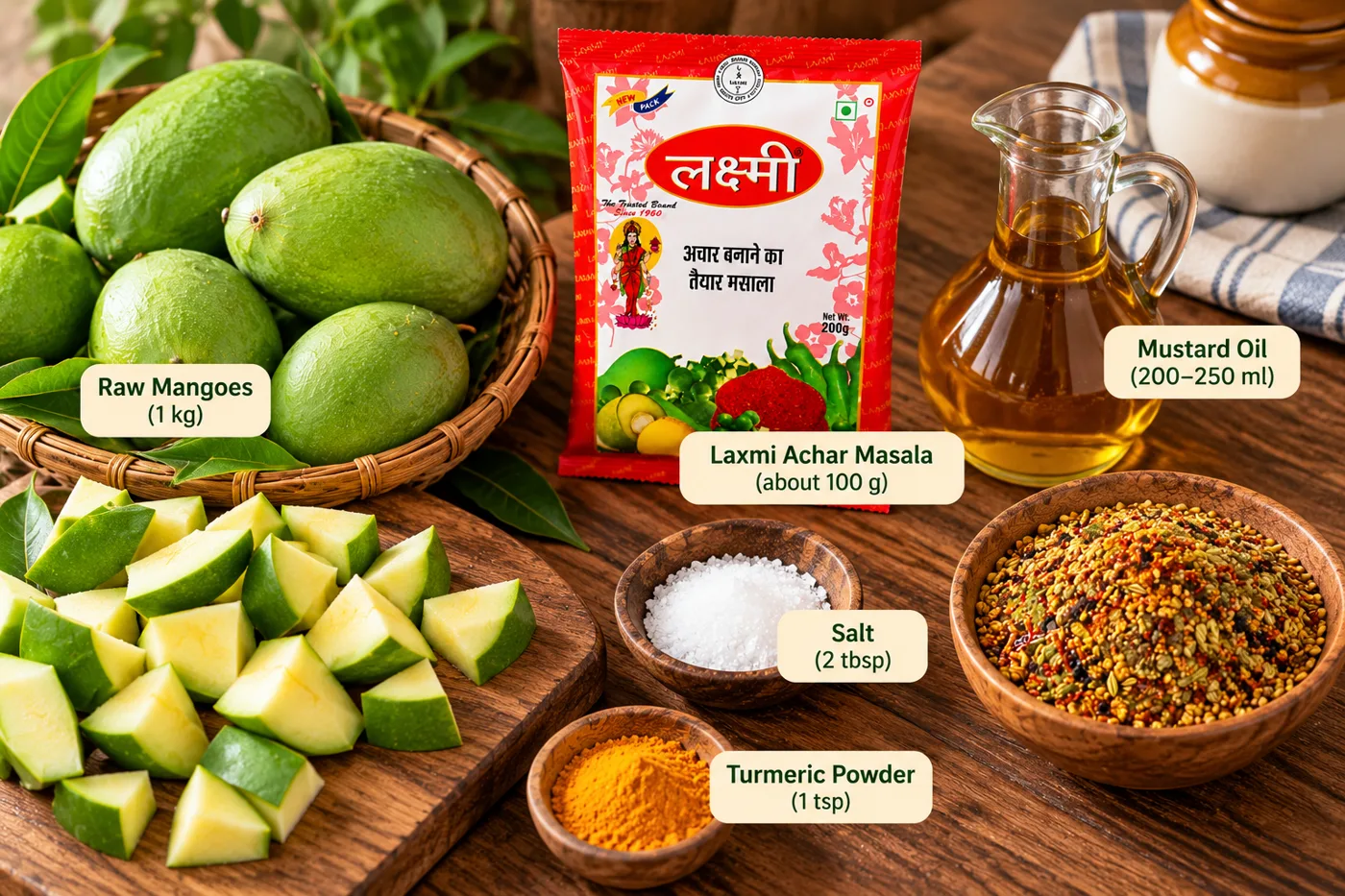
Ingredients for Aam Ka Achar
The following quantities are based on the Achar Masala usage guidance published on the Laxmi Masale website, scaled to 1 kg of raw mangoes.
| Ingredient | Quantity |
|---|---|
| Firm, unripe green mangoes | 1 kg |
| Laxmi Masale Achar Masala | 4–6 tablespoons |
| Mustard oil | As required to coat the mango pieces |
| Salt | As required |
Important: Laxmi Masale's website instructs users to add salt separately with the Achar Masala. Check the ingredient declaration on your actual pack and adjust salt according to taste. Do not add extra spices unless required by your preferred taste.
The website specifies 2–3 tablespoons of Achar Masala per 500 g of mango, which equals 4–6 tablespoons for 1 kg. It does not specify an exact salt or mustard-oil quantity; add these as required by the recipe and product instructions.
How to Make Aam Ka Achar Step-by-Step
Follow these simple steps to prepare traditional-style homemade mango pickle.
Step 1: Choose Fresh Raw Mangoes
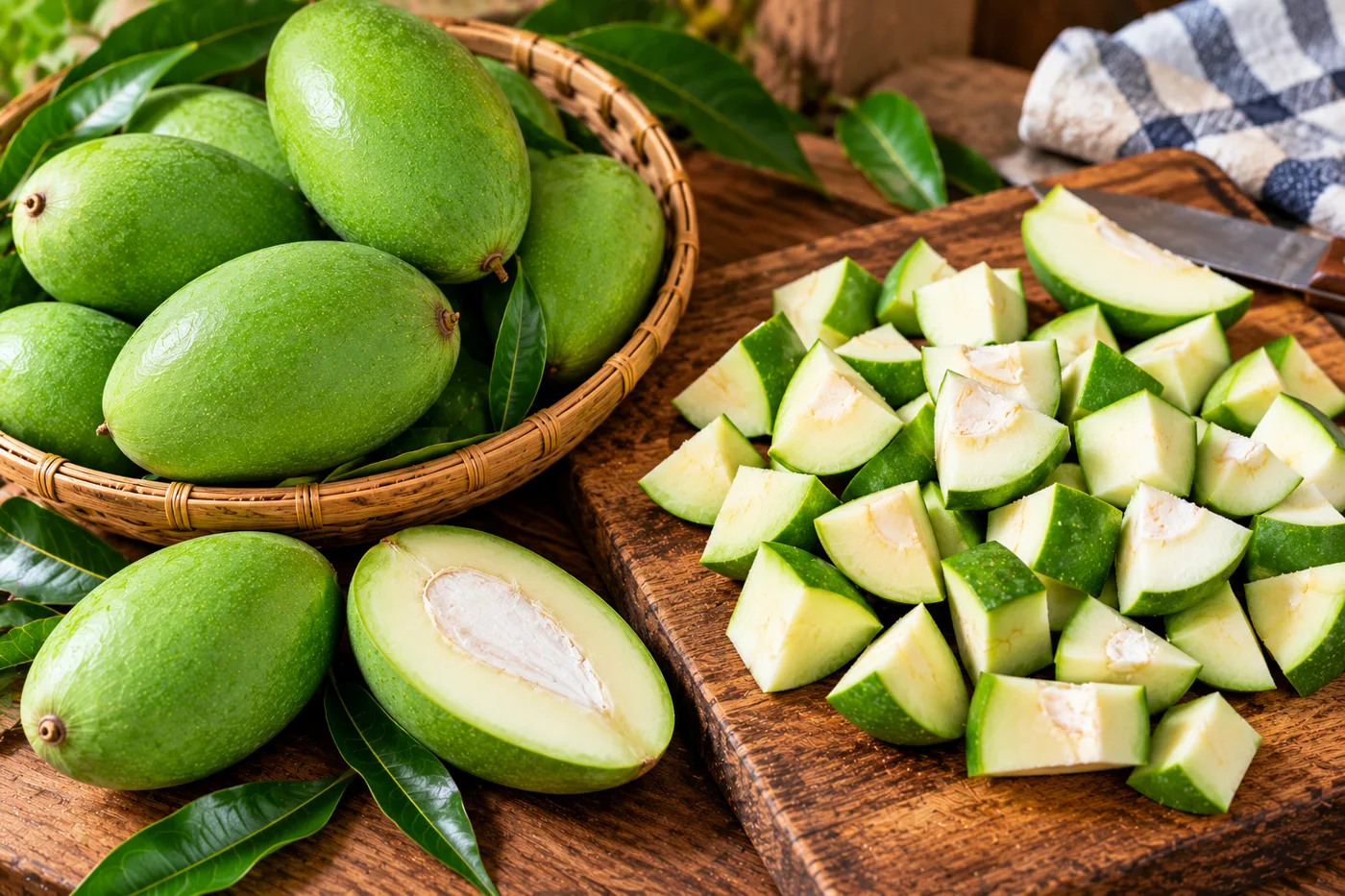
Start with firm, fresh and unripe green mangoes. Avoid fruit with soft patches, mould or visible damage. Firm mangoes are generally preferred for traditional pickle because they provide the tangy flavour and texture associated with kacche aam ka achar.
Step 2: Wash and Dry the Mangoes
Wash the mangoes thoroughly under clean running water. Wipe them with a clean kitchen towel and allow them to dry completely. Make sure your knife, chopping board, mixing bowl and storage jar are also clean and dry. Keeping excess moisture out of the preparation is an important part of making homemade mango pickle.
Step 3: Cut the Mangoes into Pieces
Cut the mangoes into suitable pickle-sized pieces, approximately 1–1.5 inches where appropriate. Keep the pieces reasonably uniform so that the masala can coat them evenly. Handle the knife carefully when cutting around the hard central stone.
Step 4: Add Salt and Let the Mangoes Rest
Place the mango pieces in a clean, dry bowl. Add salt as required and mix well. Follow a tested preparation method for any resting or draining step; the Laxmi Masale website does not specify a fixed salting-rest duration.
If the mangoes release liquid, follow the tested recipe's instructions for draining and drying before adding the masala. The Laxmi Masale website recommends that the mango pieces be fully dry before preparation.
Step 5: Heat and Cool the Mustard Oil
Heat mustard oil, then allow it to cool completely before adding it to the mango and masala mixture. The Laxmi Masale website does not specify an exact oil quantity; add enough to coat the mango pieces evenly, following a tested preservation method.
Step 6: Mix the Mangoes with Achar Masala
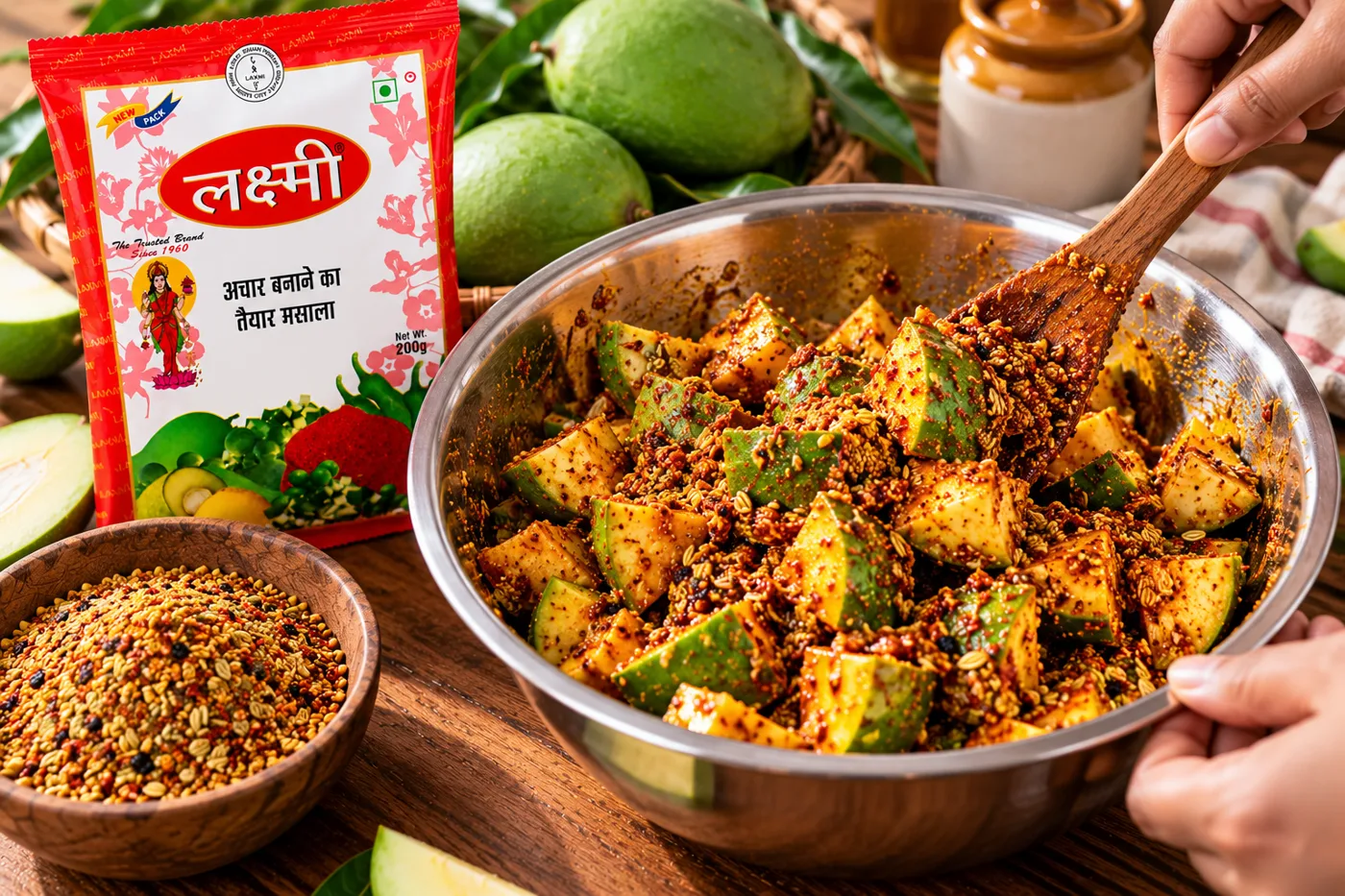
Place the fully dried mango pieces in a clean, dry mixing bowl. Add 4–6 tablespoons of Laxmi Masale Achar Masala for 1 kg of mangoes, along with salt as required. Mix thoroughly, then add cooled mustard oil to coat the pieces evenly.
For convenient spice preparation, explore Laxmi Masale Achar Masala. Check the product instructions and use the final quantity established through recipe testing.
Step 7: Transfer the Pickle to a Clean Jar
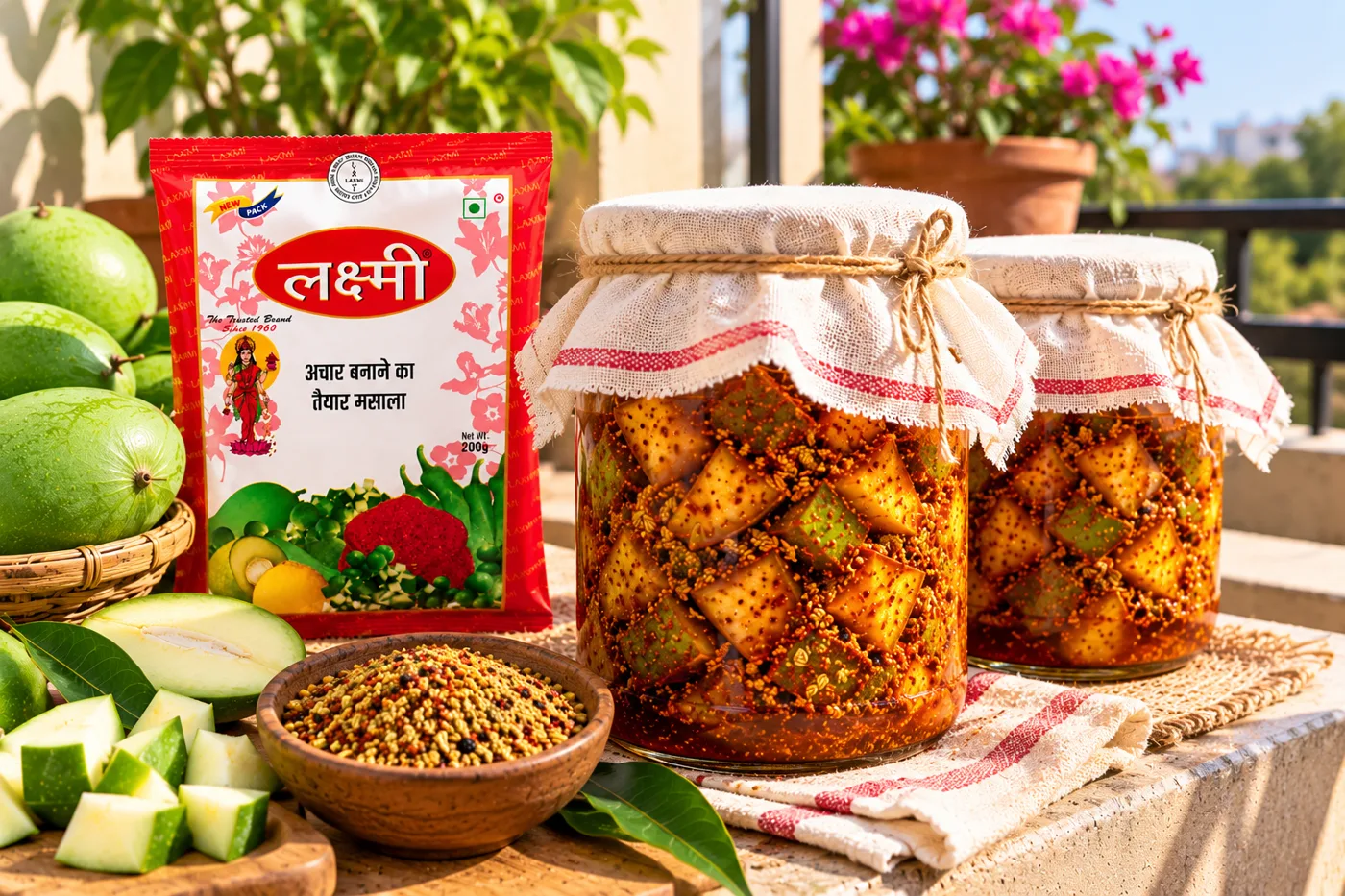
Transfer the mango and masala mixture into a clean, completely dry, food-safe glass jar. Use a clean, dry spoon to arrange the pieces. Follow the tested recipe for oil coverage and storage conditions, then close the jar securely with a suitable lid.
Step 8: Allow the Pickle to Rest
Traditional mango pickle recipes may include a resting period, and some methods call for placing the jar in sunlight. If your tested recipe specifies 3–5 days of sun exposure, follow its instructions and keep the jar securely closed as directed. The exact resting period depends on the preparation method and conditions. A fixed number of days alone does not guarantee that a pickle is safe for long-term storage.
Step 9: Let the Flavours Develop
The flavour of mango pickle can develop over time as the mango pieces interact with the spices and oil. Follow the tested recipe's resting and storage instructions before serving the finished pickle.
Why Use Ready-Made Achar Masala?
Preparing pickle from scratch can involve selecting, roasting, grinding and measuring several individual spices. A ready-made spice blend can make the process more convenient.
- Simpler preparation: Spend less time measuring individual spices.
- Convenience for beginners: A prepared blend makes the process easier to organise.
- Consistent measuring: Using the same measured quantity can help you repeat a recipe.
- Traditional flavour profile: A suitable blend brings together several spices used in pickle preparation.
If you are planning to make mango pickle at home, explore Laxmi Masale Achar Masala. and check the product information before use.
Tips for Making Better Aam Ka Achar
- Choose firm, fresh and unripe mangoes.
- Dry the mango pieces properly before adding the masala.
- Check the salt content of the Achar Masala before adding extra salt.
- Measure the masala and oil instead of estimating the quantities.
- Use clean, dry utensils throughout the preparation.
- Follow the tested recipe's storage instructions.
Common Mistakes to Avoid
Using Soft or Damaged Mangoes
Choose firm, fresh mangoes suitable for pickle preparation.
Not Drying the Mango Pieces Properly
Excess moisture can affect the quality and storage characteristics of the pickle. Dry the pieces thoroughly according to the recipe.
Adding Too Much Salt
Ready-made Achar Masala may already contain salt. Check the ingredients and proportions before adding more.
Mixing Masala into Overheated Oil
Allow the oil to cool according to the tested method before mixing it with the spice blend.
Using a Wet Spoon or Jar
Keep utensils and containers clean and dry to minimise unwanted moisture and contamination.
Ignoring Storage Instructions
Follow an appropriate, tested preservation method rather than relying on appearance or a fixed resting period alone.
How to Store Aam Ka Achar
The storage life of homemade mango pickle depends on its ingredients, preparation method, salt and oil proportions, moisture control, hygiene and storage conditions. A properly tested and preserved pickle may last for several months, but the same duration cannot be guaranteed for every homemade recipe.
For better storage practices:
- Use a clean, completely dry, food-safe glass jar.
- Always use a clean, dry spoon when serving the pickle.
- Close the lid securely after each use.
- Follow the storage conditions specified by the tested recipe.
- Avoid changing preservation-related ingredients without considering the effect on storage stability.
Food safety note: If you notice mould, an unusual smell or other signs of spoilage, do not taste the pickle to check whether it is safe. Discard it.
What to Serve with Aam Ka Achar
- Dal and rice: A tangy accompaniment to a simple meal.
- Aloo paratha: A familiar combination for breakfast or lunch.
- Roti and sabzi: Adds a contrasting flavour to everyday meals.
- Puri and sabzi: Complements a traditional Indian meal.
- Khichdi: Adds a spicy, tangy contrast to a mild dish.
- Thepla: A popular accompaniment for Gujarati meals and packed lunches.
- Curd rice: Pairs well with the mild flavour of the dish.
Frequently Asked Questions About Aam Ka Achar
Can I make aam ka achar with small raw mangoes?
Yes, small raw mangoes can be used for making pickle, provided they are firm, fresh and sour. Choose mangoes of similar size for more consistent preparation.
What is the difference between North Indian and South Indian mango pickle?
North Indian mango pickle commonly uses mustard oil and a blend of traditional spices. South Indian mango pickles often use regional spice combinations, sesame oil or other ingredients, depending on the variety and region.
Why does mango pickle sometimes taste bitter?
Bitterness can result from the mango variety, spice proportions or preparation method. Excessive fenugreek or burnt spices can also affect the flavour. Measure the ingredients carefully and follow a tested recipe.
Can I use refined oil instead of mustard oil for aam ka achar?
Yes, some pickle recipes use other edible oils. However, mustard oil provides the characteristic pungent flavour associated with traditional North Indian mango pickle. The choice of oil should also follow the preservation recipe.
Can I add jaggery or sugar to aam ka achar?
Yes, jaggery or sugar can be added to prepare a sweet-and-sour mango pickle. This creates a different flavour profile from traditional spicy aam ka achar.
Why does oil float on top of mango pickle?
Oil may collect on the surface because it is less dense than the mango and spice mixture. A surface layer of oil is common in traditional pickle recipes, but it does not by itself guarantee safe preservation.
Is homemade aam ka achar healthy?
Homemade mango pickle can be enjoyed as a flavourful accompaniment in moderate quantities. However, it may contain considerable salt and oil, so portion size is important.
Final Thoughts
Making aam ka achar at home is a way to bring traditional Indian flavours into everyday meals. Fresh raw mangoes, carefully measured spices, mustard oil and a suitable preparation method all contribute to the final result.
If you want to simplify spice preparation, explore Laxmi Masale Achar Masala from Laxmi Masale and follow a recipe suited to the blend.
Serve your homemade mango pickle with dal and rice, parathas or your favourite Indian meal to enjoy its familiar tangy flavour.
Laxmi Masale — a trusted companion for everyday Indian cooking.