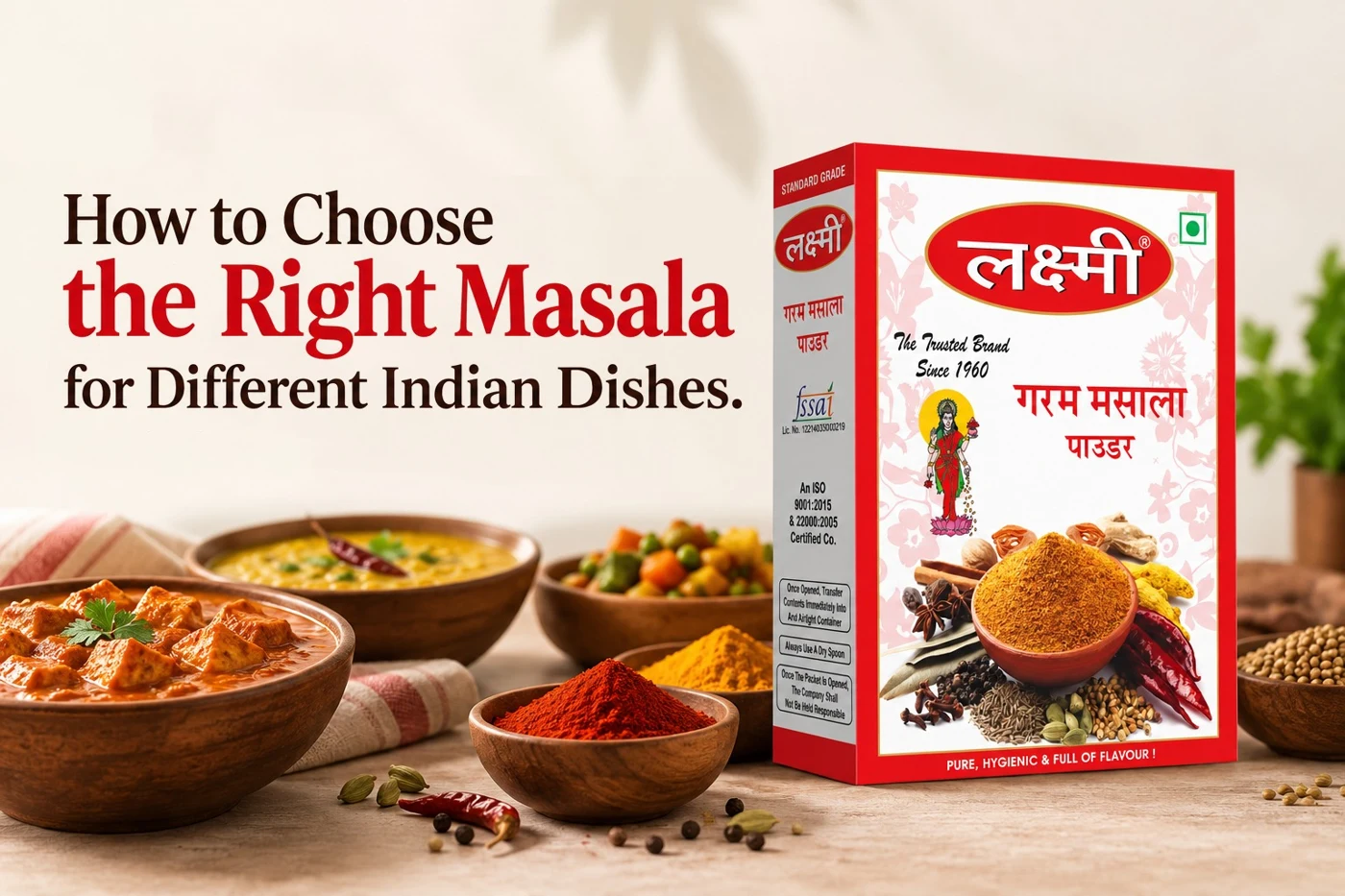
Choosing the right masala can make a noticeable difference to the flavour, aroma, and character of an Indian dish. With so many spice powders and masala blends available, it is easy to wonder which one to use for a particular recipe and how much of it is actually needed.
The right choice does not always mean adding more spices. Different masalas are designed to complement different ingredients and cooking styles, while some are better suited for adding depth, aroma, colour, or a finishing touch.
Whether you are preparing a rich paneer curry, comforting dal, spicy chole, or a simple everyday vegetable dish, understanding the role of different masalas can make cooking easier and more consistent.
In this guide, we’ll explore how to choose masalas for different Indian dishes, what to consider before adding them, and some simple tips to get a balanced flavour without overpowering the dish.
TABLE OF CONTENTS
- Why Choosing the Right Masala Matters
- Understanding Different Types of Masalas
- How to Choose Masala Based on the Dish
- How Much Masala Should You Use?
- When Should You Add Masala While Cooking?
- Common Mistakes to Avoid When Using Masalas
- How to Balance Flavours When a Dish Has Too Much or Too Little Masala
- Frequently Asked Questions
- Conclusion
Why Choosing the Right Masala Matters
The masala you choose can influence more than just the spiciness of a dish. Different masalas contain different combinations of spices, so they can add distinct layers of flavour, aroma, warmth, or depth depending on the recipe.
For example, a chickpea curry may benefit from a masala blend designed to complement legumes, while a paneer-based dish may work better with a blend that supports its creamy and rich character. Using a masala that suits the main ingredients allows the individual flavours of the dish to work together rather than competing with each other.
The quantity also matters. Even a suitable masala can overpower a dish when used excessively. Instead of adding more masala to create stronger flavour, it is often better to start with a moderate amount and adjust according to the recipe and personal preference.
Expert Tip: Think about the role you want the masala to play before adding it. Is it meant to form the base flavour of the dish, add depth during cooking, or provide a finishing aroma? This simple question can help you choose and use masalas more thoughtfully.
The right masala is ultimately about balance matching the flavour profile of the masala with the ingredients and cooking style of the dish.
Understanding Different Types of Masalas
Before choosing a masala, it helps to understand that not every masala serves the same purpose. Some blends are created for specific dishes, while others are more versatile and can be used across different recipes.
Dish-specific masalas are formulated to complement the ingredients and flavour profile of a particular preparation. For example, a chole masala is designed around the flavours commonly associated with chickpea-based dishes.
Versatile masalas, such as garam masala, can be used across several Indian preparations. They are often added to build warmth and aroma rather than define the entire flavour of a dish.
There are also masalas commonly used for snacks, chaats, and other preparations where a stronger or more distinctive flavour is desired.
The key is to look beyond the name of a masala and consider what you are cooking, which ingredients are already present, and what kind of flavour you want to develop.
A Simple Way to Think About It
Specific dish → dish-specific masala
Multiple everyday dishes → versatile masala
Snacks and chaats → masala suited to those flavour profiles
This makes choosing a masala less about having a large collection and more about understanding where each blend fits naturally in your cooking.
How to Choose Masala Based on the Dish
The easiest way to choose the right masala is to start with the dish itself. Think about the main ingredient, the type of preparation, and the flavour you want to achieve. A masala that works well in a chickpea curry may not be the right choice for a delicate vegetable preparation.
| Dish | Masala Direction | Why It Works |
| Chole | Chole masala | Complements chickpeas with a distinctive, savoury spice profile |
| Rajma | Garam masala or a suitable curry blend | Adds warmth and depth to the gravy |
| Paneer curry | Garam masala or dish-appropriate blend | Works well with rich and creamy preparations |
| Everyday vegetable curry | Coriander, cumin and other suitable spice blends | Builds a balanced base flavour |
| Dal | Cumin, coriander and selected finishing spices | Adds warmth without overpowering the lentils |
| Chaat & snacks | Chaat masala | Adds a tangy, savoury flavour suited to snacks |
Consider the Main Ingredient
The main ingredient should guide your masala choice. Ingredients such as chickpeas, kidney beans, paneer, vegetables, and lentils each have different flavour profiles and can pair differently with spice blends.
Consider the Type of Dish
A dry vegetable preparation, thick curry, dal, snack, and chaat do not necessarily need the same type or quantity of masala. The cooking method and consistency of the dish should also influence your choice.
Example: If you are making chole, a chole-focused masala can help build the characteristic flavour of the dish. For a simple mixed-vegetable curry, you may want a more versatile combination that supports the vegetables rather than dominating them.
The goal is not to use as many masalas as possible. Choose the blend that complements the main ingredient and the style of preparation, then adjust the quantity to achieve a balanced flavour.
How Much Masala Should You Use?
Choosing the right masala is only half the process; using the right amount is equally important. The quantity depends on the type of dish, the amount of ingredients, the strength of the masala, and your preferred flavour.
A common mistake is assuming that adding more masala will automatically make a dish taste better. Too much of a strong spice blend can overpower the main ingredients and make the flavours feel unbalanced. On the other hand, using too little may not provide enough depth or aroma.
A practical approach is to start with a moderate quantity and adjust gradually while cooking. Follow the recommended quantity on the product packaging or recipe when available, then make small adjustments based on the amount of food and your taste preference.
Example: If you are preparing a large batch of chole, the amount of masala required will naturally be different from a small serving. Instead of adding a large amount at once, add it gradually, allow the flavours to develop, and adjust if needed.
Keep the Balance in Mind
The masala should complement the dish rather than hide the taste of its main ingredients. Ingredients such as tomatoes, onions, cream, yoghurt, lentils, or vegetables can also influence the final flavour.
A good masala is not about maximum quantity; it is about the right balance between the spice blend and the ingredients in the dish.
When Should You Add Masala While Cooking?
The timing of adding masala can influence how its flavour develops in a dish. Not every spice blend needs to be added at the same stage, so understanding the basic cooking process can help you get better results.
Some powdered spices are commonly added while preparing the base of a curry, allowing them to cook with ingredients such as onions, tomatoes, or other ingredients. Other masalas, particularly aromatic blends such as garam masala, are often added later in the cooking process to retain more of their aroma.
The right timing can also depend on the recipe. A masala intended to build the base flavour may need time to cook, while one used mainly for aroma may work better toward the end.
Example: When preparing a curry, adding the main spice powders while developing the gravy allows their flavours to blend with the other ingredients. A small amount of garam masala added toward the end can provide an additional layer of aroma.
A Simple Rule to Remember
Base flavour → add during cooking
Aromatic finishing touch → often add toward the end
Always follow the recipe or product instructions when available, since different masala blends can be formulated and used differently.
Good masala selection and good timing work together — the right blend can still lose its impact if it is added at the wrong stage or cooked for too long.
Common Mistakes to Avoid When Using Masalas
Using the right masala does not always guarantee the right flavour. Small mistakes in quantity, timing, or preparation can change the final taste of a dish. Avoiding these common errors can help you get more balanced results.
Adding Too Many Masalas at Once
Using several strong masala blends in the same dish can make the flavours compete with each other. Instead of adding every available spice, choose the masala that best suits the dish and let its flavour work with the main ingredients.
Using More Masala to Fix Weak Flavour
If a dish tastes bland, adding a large amount of masala immediately may make the flavour overpowering rather than balanced. First consider whether the dish needs more salt, acidity, cooking time, or seasoning before increasing the masala significantly.
Adding Masala at the Wrong Stage
Some masalas benefit from being cooked with the base of the dish, while aromatic blends may work better when added later. Adding everything at the same stage can result in either muted or overly strong flavours.
Not Considering the Other Ingredients
The amount of onion, tomato, yoghurt, cream, vegetables, lentils, or other ingredients can affect how strongly a masala comes through. A quantity that works for a small batch may not be enough for a much larger preparation.
Expert Tip: Before adding another spoonful of masala, taste the dish and identify what is actually missing. Sometimes the problem is not the masala itself but the balance of salt, acidity, richness, or cooking time.
Relying Only on the Masala for Flavour
Masala is one part of a dish, not the entire flavour profile. Fresh ingredients, proper cooking, seasoning, and the cooking method all contribute to the final result.
The best approach is to use masalas as part of a balanced recipe rather than allowing them to dominate every other flavour.
How to Balance Flavours When a Dish Has Too Much or Too Little Masala
A dish can sometimes end up tasting too strong, too mild, or unbalanced even when you have chosen the right masala. The solution is not always to add more spices. Understanding what the dish is missing can help you correct the flavour without overpowering the main ingredients.
If the Masala Flavour Is Too Strong
If a dish tastes heavily spiced, increasing the quantity of the other ingredients can help distribute the flavour more evenly. Depending on the recipe, adding more gravy, vegetables, lentils, or another suitable base ingredient can bring the dish back into balance.
Avoid adding another strong masala to counter the first one, as this can make the overall flavour even more complicated.
If the Masala Flavour Is Too Mild
Before adding more masala, let the dish cook for a little longer and taste it again. If it still needs more flavour, add a small amount gradually rather than adding a large quantity at once.
If the Dish Tastes Unbalanced
Sometimes the issue is not the amount of masala at all. Salt, acidity, richness, and sweetness can all influence how spices are perceived.
Example: If a tomato-based curry feels too sharp, adjusting the overall seasoning and richness may help more than simply adding extra masala.
Expert Tip: Taste at different stages of cooking. This makes it easier to identify what the dish actually needs and prevents over-seasoning.
A Simple Flavour Check
Before making another adjustment, ask:
Is the dish too spicy, too salty, too sour, too rich, or simply lacking aroma?
Identifying the specific problem first makes it much easier to decide whether you actually need more masala.
The aim is not to make a dish taste strongly of masala; it is to create a balanced flavour where the spices complement the main ingredients.
Frequently Asked Questions
Which masala is best for everyday Indian cooking?
There is no single masala that is best for every dish. Versatile blends such as garam masala can work across several preparations, while dish-specific masalas are better when you want the characteristic flavour of a particular recipe.
How do I choose the right masala for a dish?
Start with the main ingredient and the type of dish you are preparing. Then choose a masala that complements those flavours rather than trying to use several different blends at once.
Can I use garam masala in every Indian dish?
Garam masala is versatile, but it does not necessarily suit every preparation in the same quantity or at the same cooking stage. Its use should depend on the recipe and the flavour profile you want.
How much masala should I add to a curry?
The appropriate amount depends on the quantity of food, the specific masala, and the recipe. Start with a moderate amount and adjust gradually after tasting rather than adding a large quantity at once.
Should masala be added at the beginning or end of cooking?
It depends on the type of masala and the recipe. Some spice powders are cooked with the base, while aromatic blends may be added later to provide a finishing layer of flavour.
Can I use two different masalas in the same dish?
Yes, but they should have complementary flavour profiles. Using too many strong blends together can make the dish taste complicated or overpower the main ingredients.
What should I do if I accidentally add too much masala?
Avoid immediately adding another strong spice blend. Depending on the dish, increasing the base ingredients or adjusting the overall seasoning can help distribute the flavour more evenly.
Does the cooking method affect which masala I should use?
Yes. A dry vegetable preparation, thick curry, dal, snack, or chaat may call for different flavour profiles and quantities. The cooking method should therefore be considered along with the main ingredient when choosing a masala.
Conclusion
Choosing the right masala is less about using more spices and more about understanding what each dish needs. The main ingredient, cooking style, desired flavour, and quantity all play a role in selecting the right masala.
Dish-specific blends can help create familiar flavours, while versatile masalas can work across a range of everyday preparations. Using the right quantity and adding masalas at an appropriate stage can also make a noticeable difference to the final dish.
The simple rule is to choose a masala that complements the dish, use it in moderation, and adjust the flavour gradually while cooking.