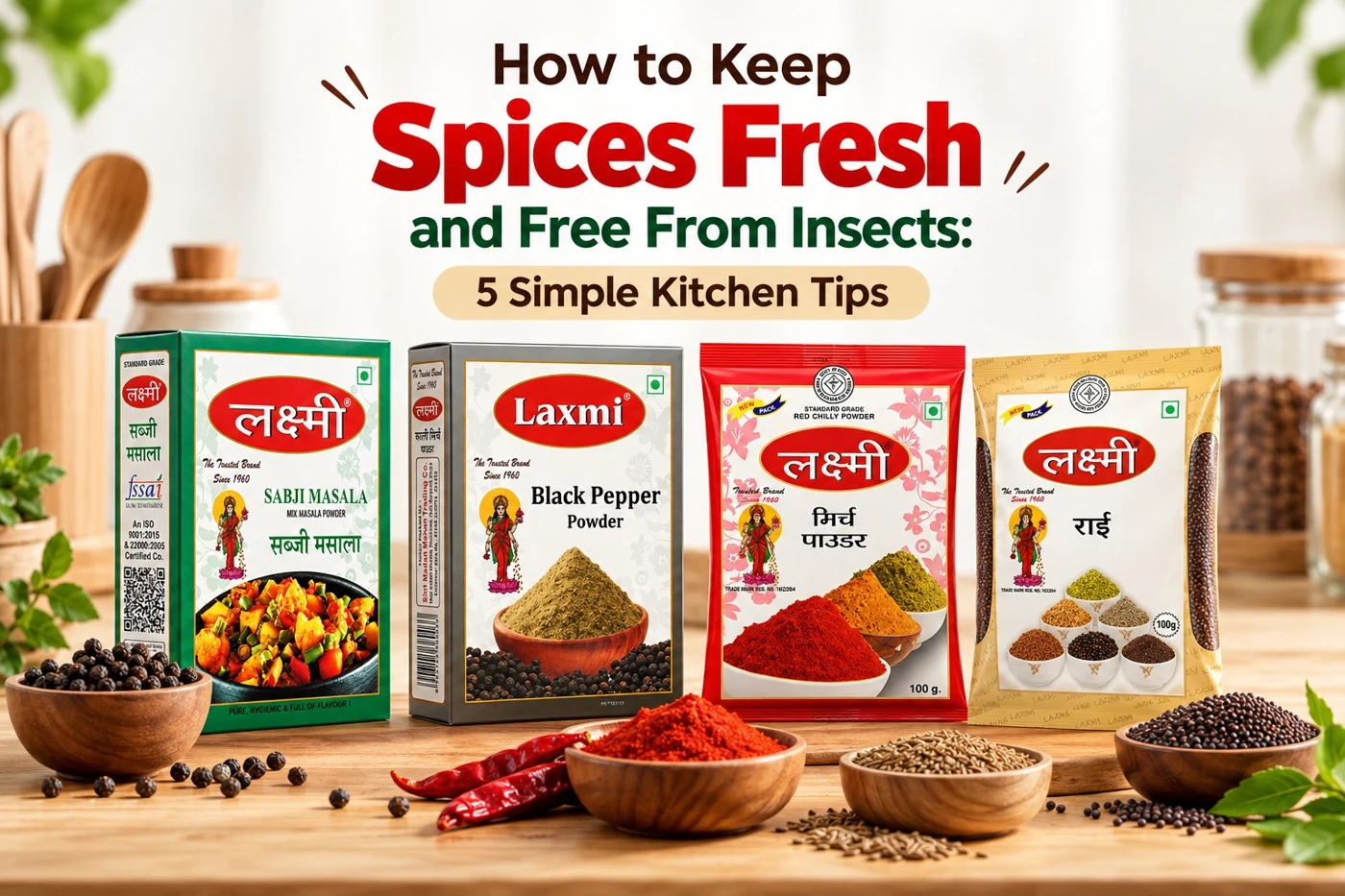
There is nothing more frustrating than opening a packet of masala and finding that the powder has become damp, lumpy, or has tiny insects inside. You may have bought fresh spices, but everyday kitchen habits can make them lose their quality much sooner than expected.
Moisture is one of the biggest problems, especially for powdered spices. Steam from cooking, a wet spoon, humid air, or a loosely closed container can introduce moisture into your masalas. Once spices are exposed to unsuitable storage conditions, they can also become more vulnerable to quality problems and insects.
The good news is that you do not need complicated products or expensive storage systems to protect your spices. A few simple habits can make a noticeable difference.
In this guide, we’ll look at five practical kitchen tips to keep spices dry, fresh, and less vulnerable to insects, along with common mistakes to avoid and answers to some frequently asked questions.
Table of Contents
- Why Do Spices Attract Insects and Moisture?
- Keep Spice Containers Completely Dry
- Store Spices in Airtight Containers
- Keep Spices Away From Heat and Steam
- Buy and Store Spices in Practical Quantities
- Check Spices Before Storing and Using Them
- Common Mistakes That Can Invite Moisture and Insects
- What to Do If You Find Insects in Your Spices
- Frequently Asked Questions
- Conclusion
- About the Author
Why Do Spices Attract Insects and Moisture?
Dry spices may seem like ingredients that can simply sit in the kitchen for months, but their storage environment matters. Humidity, heat, air exposure, and poor handling can gradually affect their quality.
Moisture is particularly troublesome for powdered spices. When a container is left open near cooking steam or a damp spoon is used, small amounts of moisture can enter the spice. Over time, this can cause clumping and changes in texture and freshness.
Insects can also become a problem when spices are stored for long periods or when a package has been compromised. Pantry pests may enter through damaged packaging or already be present in stored dry foods, so good storage is only one part of prevention.
A simple rule to remember
Dry spices + clean containers + tight seals + cool storage = better protection.
Expert Tip: Do not wait until you see insects or large clumps before checking your spice collection. A quick inspection when opening an older packet can help you spot changes in smell, texture, or appearance early.
Keep Spice Containers Completely Dry
One of the easiest ways to protect your masalas is also one of the most commonly overlooked: make sure the container is completely dry before storing spices in it.
Even a small amount of water left inside a washed jar, around the lid, or on a spoon can introduce unwanted moisture into a dry spice. This becomes especially important in humid weather.
If you are transferring Laxmi Masale from its original packet into another container, wash the container if needed and allow it to dry completely before filling it. Pay attention to the inside of the lid as well, because hidden moisture can remain there.
What to check before filling a container:
- The inside of the container is completely dry
- The lid has no water droplets
- Any spoon used with the container is dry
- The container does not have old spice residue or moisture
Example: If you wash your spice jars in the morning and immediately refill them while the inside still feels slightly damp, you are introducing moisture before the new spice even gets a chance to be stored properly.
A few extra minutes of drying can prevent this simple mistake.
Store Spices in Airtight Containers
Once a spice packet has been opened, keeping it properly sealed becomes important. Airtight containers can help reduce exposure to humid air and keep the spices better protected between uses.
Glass jars, steel containers, and suitable food-safe airtight containers can all work. The material is less important than having a clean container with a secure-fitting lid.
If you prefer keeping spices in their original packaging, make sure the packet can be sealed properly after every use. If the packaging does not close securely, transferring the spice to an airtight container can be more practical.
One habit worth changing
Do not leave spice containers open while cooking.
It is easy to open the turmeric or chilli powder, take what you need, and leave the lid aside while preparing the next ingredient. But cooking steam and humid kitchen air can enter the container during this time.
Close the container as soon as you have taken the required amount.
Expert Tip: Avoid repeatedly opening a large container if you use a spice only occasionally. Keeping a practical quantity in your everyday container can reduce unnecessary exposure of the entire stock.
Keep Spices Away From Heat and Steam
The area around your stove may seem like the most convenient place for spices, but it is not always the best one.
Steam from boiling dal, cooking rice, pressure cookers, and hot pans can increase moisture around the cooking area. Heat and light can also gradually affect the quality and aroma of spices. A cool, dark cabinet away from the stove is generally a better storage location.
Avoid storing spices directly:
- Beside the gas stove
- Above the oven
- Next to a kettle or other steaming appliance
- Beside the kitchen sink
- On a sunny windowsill
A practical example
If your masala box is kept right next to the stove because it is convenient, you do not necessarily need to move it across the kitchen. Even shifting it into a nearby closed cabinet can reduce direct exposure to heat and steam.
The best storage location is one that is easy to reach but protected from the busiest, hottest and most humid parts of your kitchen.
Buy and Store Spices in Practical Quantities
Buying spices in bulk can appear economical, but it is not always the best choice if you use them slowly.
A large packet of a spice that you use only occasionally may remain open for months. During that time, repeated exposure to air, moisture, and kitchen conditions can gradually affect its freshness.
Buying quantities according to your actual cooking habits can make storage easier and reduce unnecessary wastage. Laxmi’s own guidance also recommends buying smaller quantities more frequently rather than keeping large amounts for long periods.
For example, if Turmeric Powder and Coriander Powder are part of your everyday cooking, you may naturally finish them faster. A less frequently used specialty spice may be better purchased in a smaller quantity.
Think about usage, not just price
Before buying a large pack, ask:
“How quickly will I actually use this?”
That simple question can help you maintain a fresher spice collection.
Check Spices Before Storing and Using Them
Good storage starts with checking the condition of the spices you already have.
When opening a new packet or checking an older container, look for anything unusual in its appearance, smell, texture, or packaging.
Powdered spices should generally remain dry and reasonably free-flowing. If you notice unusual moisture, significant clumping, insects, webbing, mould, or an abnormal smell, do not simply mix the contents with a fresh batch.
Whole spices should also be checked for visible insects, damaged packaging, or unusual changes.
Expert Tip: Never mix a new packet of spice directly into a container that still has an older batch at the bottom. Empty, clean, and completely dry the container before refilling it.
This simple habit makes it easier to keep track of older stock and prevents old residue from being carried into a fresh batch.
Common Mistakes That Can Invite Moisture and Insects
Sometimes the problem is not the spice itself but the way it is handled every day.
Using a Wet Spoon
This is one of the easiest ways to introduce moisture into powdered spices. Always use a clean, dry spoon.
Shaking Spices Directly Over Steam
Holding an open spice jar or packet over a steaming pan can allow moisture to enter. Take the required amount first and then add it to the food.
Leaving Packets Open
An open packet is more exposed to humidity, air, and kitchen contaminants. Reseal it properly or transfer the contents to a suitable airtight container.
Keeping Old and New Stock Together
Adding a new packet to an old batch makes it difficult to know how long the contents have been stored. It is better to finish, clean, dry, and refill the container.
Storing Too Close to the Sink
The sink is a high-moisture area. A nearby cabinet is generally a better choice for dry spices.
Ignoring Damaged Packaging
If a packet has a tear, damaged seal, or other visible packaging problem, inspect the contents carefully rather than assuming everything is fine.
What to Do If You Find Insects in Your Spices
If you discover insects, webbing, mould, or other signs of contamination in a spice container, do not try to save the affected portion by simply removing the visible insects.
The safer approach is to discard the affected spice and inspect nearby dry food products that may have been stored alongside it. Clean the storage area and check unopened packages for damage or signs of infestation.
It is also worth remembering that finding insects does not automatically mean the entire kitchen has a pest problem. Pantry pests can sometimes enter through a single contaminated or compromised food package.
After cleaning the area, focus on prevention:
- Keep dry foods properly sealed
- Check packages before storing them
- Clean shelves regularly
- Avoid keeping old and new stock mixed together
- Store spices in dry, secure containers
Do not use a spice that shows visible mould, unusual contamination, or clear signs of spoilage.
Frequently Asked Questions
How can I keep spices free from insects?
Store spices in clean, completely dry and tightly sealed containers. Keep them away from heat, moisture, and direct sunlight, and regularly check older spices for signs of insects or contamination.
Why do spices become wet or lumpy?
Spices can absorb moisture from humid air, cooking steam, wet spoons, or damp containers. Powdered spices are particularly prone to clumping when exposed to moisture.
Should I store spices near the stove?
It is better to avoid storing spices directly beside the stove. Heat and steam can expose them to conditions that gradually affect their quality. A cool, dry cabinet nearby is generally a better option.
Can I store spices in their original packets?
Yes, if the packaging can be closed securely after every use. If the packet does not reseal properly, transferring the spice to a clean, airtight container can provide better protection.
Is it okay to use a spice that has small clumps?
Small clumps can simply indicate moisture exposure and do not by themselves prove that a spice is spoiled. However, if there is mould, insects, an unusual smell, or other signs of contamination, it should not be used.
How should I store spices during humid weather?
Keep them in completely dry, airtight containers and store them in a cool, dry place away from steam and the sink. Using smaller quantities for frequently used spices can also help limit long-term exposure to humidity.
Can I mix a fresh packet with an older spice?
It is better not to. Empty the old contents, clean the container, let it dry completely, and then add the fresh batch. This keeps the storage cleaner and makes stock rotation easier.
What should I do if I find insects in one spice container?
Discard the affected spice, clean the container and surrounding storage area, and inspect nearby dry foods and spice packets. Look for damaged packaging or other signs of infestation before storing fresh products again.
Quick Takeaway
-
Keep spices dry and tightly sealed.
-
Store them away from heat, steam and direct sunlight.
-
Always use a clean, dry spoon.
-
Buy quantities according to how quickly you use them.
-
If you find insects, mould or clear contamination, discard the affected spice.
Conclusion
Keeping your spices fresh and free from insects does not require a complicated kitchen routine. The basics are simple: control moisture, use clean and dry containers, seal spices properly, keep them away from heat and steam, and avoid storing more than you can reasonably use.
Small habits such as using a dry spoon or closing a container immediately after cooking may seem insignificant, but they can make a real difference over time.
And when you notice insects, mould, or clear signs of contamination, do not try to rescue the affected spice. Replace it and check the surrounding storage area.
Good spices deserve good storage. A little care in the kitchen can help you get better flavour from every Laxmi Masale packet you open.
About the Author
Laxmi Masale brings carefully selected spices and masalas to everyday Indian kitchens, with a focus on authentic flavours and quality. Our content shares practical tips and useful insights to help you make the most of your everyday cooking.