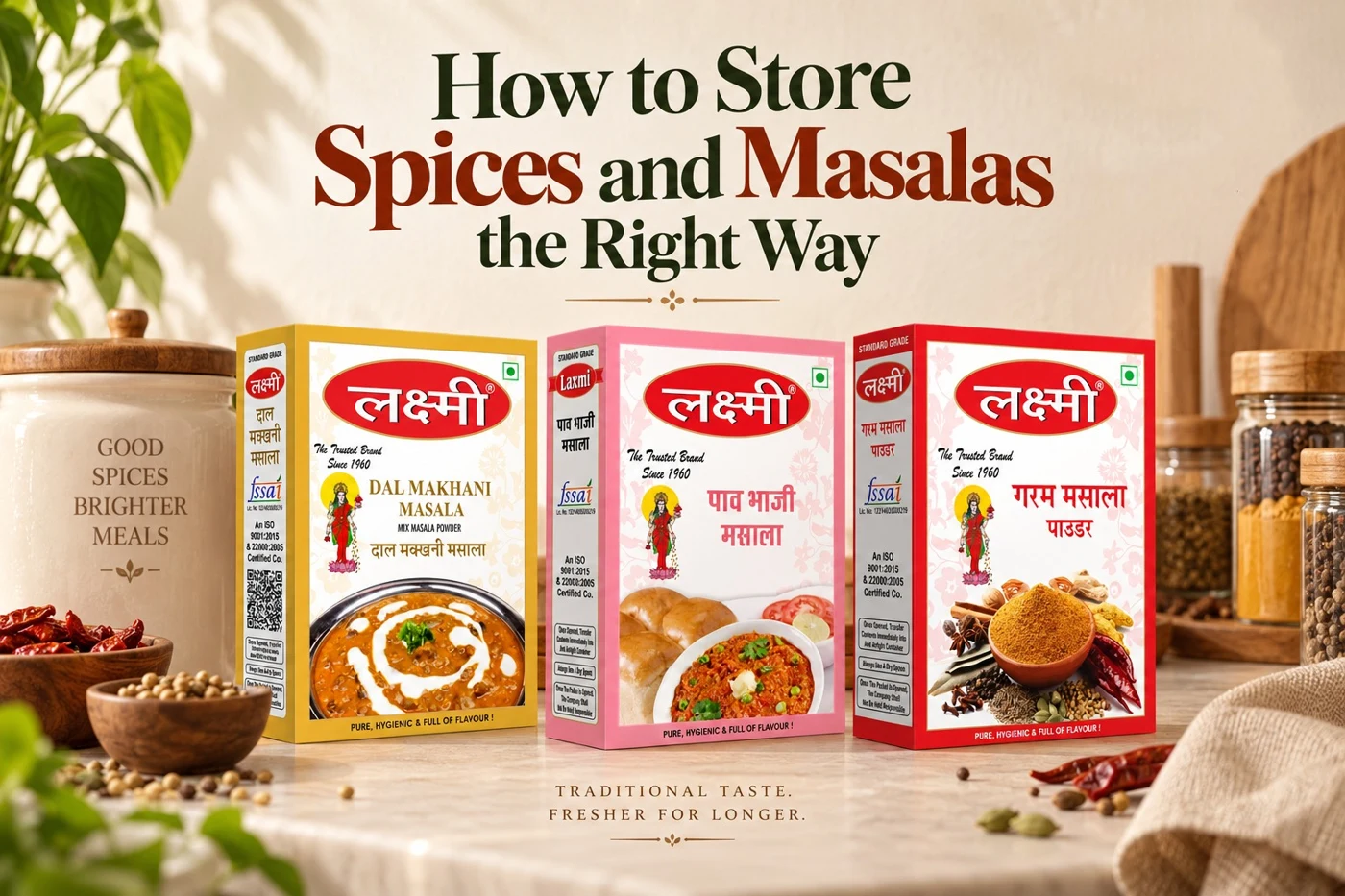
Spices and masalas are an everyday part of Indian cooking, but the way they are stored can make a noticeable difference to their flavour, aroma, and freshness. A packet may be opened only once and then left near the stove, or spice powders may be kept in containers that are not properly sealed. Over time, heat, moisture, air, and light can affect their quality.
The good news is that storing spices properly does not require complicated steps or special equipment. A few simple changes in how you store, handle, and organize your spices can help them stay fresh for longer and make everyday cooking more enjoyable.
In this guide, we’ll look at practical ways to store both whole spices and masalas, common mistakes to avoid, and simple signs that can help you tell whether your spices are still fresh.
TABLE OF CONTENTS
- Why Proper Spice Storage Matters
- What Makes Spices Lose Their Freshness?
- How to Store Spices and Masalas Properly
- Whole Spices vs Spice Powders: Do They Need Different Storage?
- Common Spice Storage Mistakes to Avoid
- How to Tell If Your Spices Are Still Fresh
- How Long Do Spices and Masalas Stay Fresh?
- Frequently Asked Questions
Why Proper Spice Storage Matters
Spices and masalas are used in small quantities, but they play an important role in the taste and aroma of everyday meals. When they are stored incorrectly, their natural aroma can fade and their flavour may become less noticeable over time.
Proper storage helps protect spices from common factors such as heat, moisture, air, and direct sunlight. This is especially important for spice powders, which have more surface area exposed to the environment than whole spices.
Good storage also makes it easier to keep your kitchen organized and avoid unnecessary wastage. Instead of replacing spices simply because they have lost their freshness, storing them correctly can help you get better use from them.
The goal is simple: keep your spices dry, protected, and easy to use, so they can retain their characteristic flavour and aroma for as long as possible.
What Makes Spices Lose Their Freshness?
Spices naturally lose some of their aroma and flavour over time, but the way they are stored can speed up this process. Four common factors are mainly responsible: heat, moisture, air, and light.
| Factor | What It Can Do | Better Storage Practice |
| Heat | May reduce aroma over time | Store away from stove and oven |
| Moisture | Can cause powders to clump | Use dry spoons and keep containers sealed |
| Air | Can gradually reduce aroma | Use airtight containers |
| Light | May affect colour and quality | Store in a dark cabinet |
Keeping these four factors under control can go a long way toward maintaining the freshness, aroma, and flavour of your everyday spices and masalas.
How to Store Spices and Masalas Properly
Storing spices and masalas properly does not require a complicated setup. The main goal is to protect them from heat, moisture, air, and direct sunlight while keeping them easy to access when cooking.
Use Airtight Containers
Once opened, spice powders and masalas can be kept in clean, dry, airtight containers. A tightly sealed container helps reduce exposure to air and moisture, which can gradually affect aroma and flavour. If the original packaging is resealable and closes properly, it can also be used for storage.
Keep Spices Away from Heat
Avoid storing spices directly next to the stove, oven, or other sources of heat. Frequent exposure to warmth can affect their quality over time. A cool kitchen cabinet or pantry is generally a better option.
Store Spices in a Dry Place
Moisture can cause powdered spices to become lumpy and may affect their freshness. Keep containers away from the sink and other damp areas. Always use a completely dry spoon when taking out spices, and close the container immediately after use.
Protect Spices from Direct Sunlight
Direct sunlight is another factor to consider when choosing a storage location. Instead of leaving spice containers on a sunny countertop or near a window, keep them inside a closed cabinet or pantry where they are protected from strong light.
Buy Quantities Based on Your Usage
Buying large quantities may seem convenient, but it is not always practical for spices that you use occasionally. Purchasing amounts that match your cooking habits can help you use spices while they are still fresh and reduce unnecessary wastage.
Keep the Storage Area Clean and Organized
A clean and organized spice area makes it easier to find and use different spices regularly. Label containers clearly, keep frequently used spices within easy reach, and make sure the storage area remains dry and away from heat.
With these simple habits, you can create a better storage routine for your everyday spices and masalas while helping them retain their characteristic aroma and flavour for longer.
Expert Tip: Keep frequently used spices in a cool, dry cabinet rather than directly beside the cooking area. Convenience is useful, but protecting spices from repeated heat and moisture exposure is more important.
Whole Spices vs Spice Powders: Do They Need Different Storage?
Whole spices and spice powders can both be stored effectively, but they do not behave exactly the same way once opened. Since ground spices have a larger surface area exposed to air, they can generally lose their aroma and flavour more quickly than whole spices.
Whole spices such as cumin seeds, coriander seeds, black pepper, and cardamom should be kept in clean, dry, airtight containers and stored away from heat, moisture, and direct sunlight. Keeping them whole until needed can also help preserve their natural aroma.
Spice powders and masalas need a little more attention because their finer texture makes them more exposed to air and moisture. They should be kept tightly sealed and handled only with dry, clean spoons.
For both types, the storage principle remains the same: keep them dry, cool, protected from light, and properly sealed. The main difference is that ground spices usually require more care because their freshness can decline faster after grinding.
So, whether you use whole spices or powdered masalas in your kitchen, proper storage is an important part of maintaining their flavour and aroma.
Common Spice Storage Mistakes to Avoid
Even when spices are kept in containers, a few everyday habits can still affect their freshness. Avoiding these simple mistakes can make your storage routine more effective.
Keeping Spices Near the Stove
The convenience of keeping frequently used spices beside the stove can come at the cost of unnecessary heat exposure. Try storing them in a nearby cabinet or another cool area instead.
Using Wet Spoons
A wet or damp spoon can introduce moisture into spice powders and masalas. Always use a clean and completely dry spoon when taking out spices.
Leaving Containers Open
Leaving spice containers open while cooking exposes them to air, kitchen humidity, and cooking heat. Close the container as soon as you have taken the required amount.
Storing Spices in Direct Sunlight
Keeping spice jars on a windowsill or another place with strong sunlight may affect their quality over time. A closed cabinet or pantry is usually a more suitable option.
Buying More Than You Use
Buying spices in large quantities may seem economical, but rarely used spices can sit unused for long periods. Choose quantities based on how frequently you actually use them.
Mixing Old and New Spices
Adding a new batch of spice powder directly into a container that still contains an older batch can make it difficult to track how long the spices have been stored. Using a clean container for a new batch helps maintain better storage practices.
Avoiding these common mistakes can help keep your spices and masalas better protected and make it easier to maintain an organized kitchen.
Quick Spice Storage Checklist
☐ Keep containers tightly closed
☐ Use completely dry spoons
☐ Store away from heat
☐ Avoid direct sunlight
☐ Keep away from moisture
☐ Don’t mix old and new batches
☐ Buy quantities according to usage
How to Tell If Your Spices Are Still Fresh?
Spices can gradually lose their aroma, colour, and flavour, especially when they have been stored for a long time or exposed to heat, moisture, air, or light. Before replacing a spice, you can check a few simple signs to understand whether it has retained its freshness.
Check the Aroma
A spice should have a recognizable aroma when you open the container. If the smell has become very weak or almost disappeared, the spice may have lost much of its aromatic quality. For whole spices, gently crushing or rubbing a small amount between your fingers can help release their aroma.
Look at the Colour
Colour can also provide a useful indication of freshness. A spice that has become noticeably dull or faded compared with its original appearance may have lost some of its quality over time. However, natural colour variations can occur, so colour should not be the only factor you consider.
Check the Texture
Powdered spices should generally remain dry and reasonably free-flowing. If you notice unusual dampness, persistent clumping, or signs of moisture inside the container, it is worth checking the spice more carefully before using it.
Taste and Flavour
If the spice looks and smells normal, its flavour is another useful indicator. A small amount used during cooking can reveal whether it still provides the expected taste and aroma. Older spices may still be usable but may require more quantity to achieve the same flavour, which can indicate that their potency has declined.
Expert Tip: Do not judge a spice only by how old the packet is. Storage conditions matter too. A properly sealed spice kept in a cool, dry place can retain its quality better than one exposed repeatedly to heat and moisture.
A simple check of aroma, appearance, texture, and flavour can help you understand whether your spices are still at their best. If there are clear signs of moisture, contamination, or spoilage, however, it is better not to use them.
How Long Do Spices and Masalas Stay Fresh?
Spices and masalas do not stay at their best indefinitely. Their flavour and aroma gradually become less noticeable over time, and the rate at which this happens depends on factors such as the type of spice, whether it is whole or ground, its packaging, and how it has been stored.
Whole spices generally retain their characteristic aroma longer than ground spices because less of their surface is exposed to air. Ground spices and blended masalas can lose their aromatic quality sooner, particularly after opening if they are not sealed properly.
Instead of relying only on a fixed number of months, it is better to check the best-before date on the package and pay attention to the condition of the spice. Proper storage can help maintain quality throughout its intended shelf life.
Once opened, try to keep the package or container tightly sealed and avoid unnecessary exposure to heat, moisture, and air. If a spice has developed an unusual smell, visible moisture, mould, or other signs of spoilage, it should not be used.
Expert Tip: Buy spices according to how frequently you use them. Regularly used spices can be purchased in practical quantities, while less frequently used spices are better bought in smaller quantities to avoid keeping them unused for too long.
Frequently Asked Questions
Should spices be stored in the refrigerator?
Most dried spices do not need to be refrigerated. A cool, dry, dark cupboard with properly sealed containers is generally more practical. Refrigeration can also introduce condensation when containers are repeatedly taken in and out.
Is it better to store spices in glass or plastic containers?
Both can work if the container is clean, dry, and properly sealed. The most important factor is an airtight closure and suitable storage away from heat, moisture, and direct sunlight.
Can spices be stored near the stove?
It is better to avoid storing spices directly near the stove. Frequent exposure to heat and steam can affect their freshness and aroma over time.
Should whole spices be stored differently from spice powders?
The basic storage principles are the same, but ground spices generally need more attention because their larger surface area can make them more susceptible to losing aroma through exposure to air.
How can I keep spice powders from becoming lumpy?
Keep them away from moisture and always use a clean, completely dry spoon. Close the container immediately after use and avoid storing spice powders in damp areas of the kitchen.
Can I keep spices in their original packaging?
Yes, provided the packaging can be sealed properly after opening. If it cannot be closed securely, transferring the spice to a clean, airtight container can provide better protection.
What is the best place to store spices in a kitchen?
A cool, dry, dark cabinet or pantry away from the stove, oven, sink, and direct sunlight is generally a suitable storage location.
Is a masala box good for storing spices?
A masala box can be convenient for frequently used spices, but it should be kept covered, dry, and away from heat and steam. Spices that are used less often can remain in tightly sealed individual containers.
Conclusion
Properly storing spices and masalas does not require complicated methods. Simple habits such as keeping them away from heat and moisture, protecting them from direct sunlight, using dry spoons, and sealing containers properly can help maintain their aroma and flavour for longer.
It is also useful to consider how often you use each spice, check its condition from time to time, and buy quantities that match your needs. Whether you prefer whole spices or powdered masalas, good storage helps you get the best from them in everyday cooking.
The simple rule to remember is: keep your spices cool, dry, dark, and tightly sealed.
A Simple Habit to Follow
The next time you organize your kitchen, take a quick look at your spice collection. Move any containers kept near heat or moisture, make sure the lids are properly closed, and check older spices for their aroma, appearance, and condition. A few small changes can make your everyday spice storage much more effective.
Quick Takeaway
- Store spices in a cool, dry and dark place.
- Keep containers tightly sealed and use dry spoons.
- Keep whole spices and spice powders protected from heat and moisture.
- Check aroma, appearance and texture before using older spices.